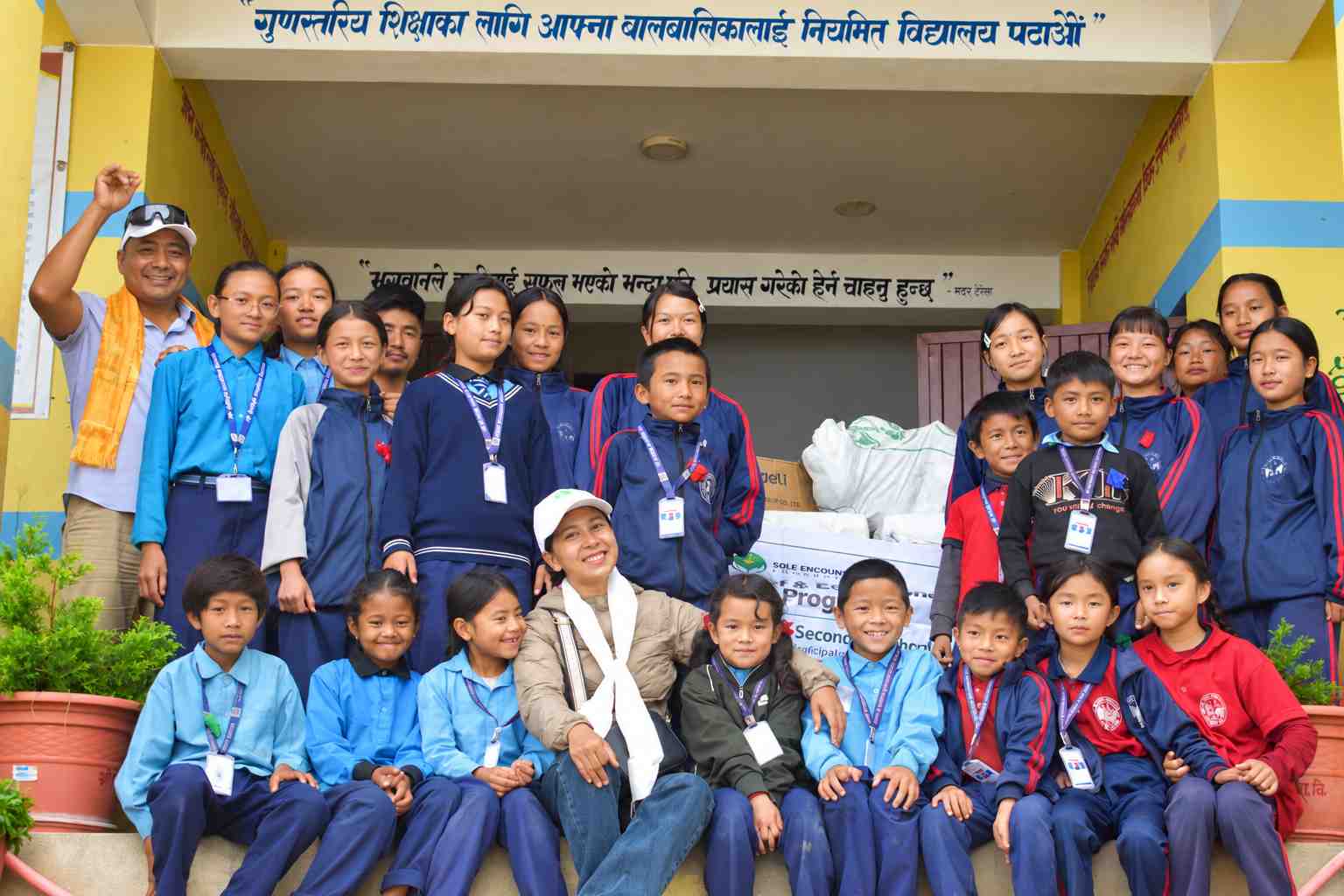
On 1 October 2026, Sole Encounters Foundation travelled to Ramche, Kalika Rural Municipality-1, Rasuwa, to support students affected by the Bhotekoshi flood and assess conditions in communities recovering from the disaster. The project began after we received information that students at Shree Setibhume Secondary School were facing shortages of basic learning materials.
Following discussions with the school, we decided to provide stationery, educational supplies and sports materials. A total of 354 students received direct support.
The journey also became an important field assessment. Damaged roads, disrupted supply routes, limited accommodation, difficult market conditions and ongoing reconstruction showed that recovery was still far from complete. School leadership also drew attention to 19 students facing particularly serious family circumstances following the disaster and requiring further assessment for longer-term assistance.
The visit allowed us to meet students, teachers, school leaders and community members directly. It helped us understand that disaster recovery is not only about repairing roads and buildings. Families also face educational, financial, emotional and social challenges.
This report documents the assistance delivered, conditions observed, immediate impact, community concerns and priorities for future support.
Field Visit: 1 October 2026
Program: Emergency Educational Material Support Program
Students Supported: 354
Implemented by: Sole Encounters Foundation
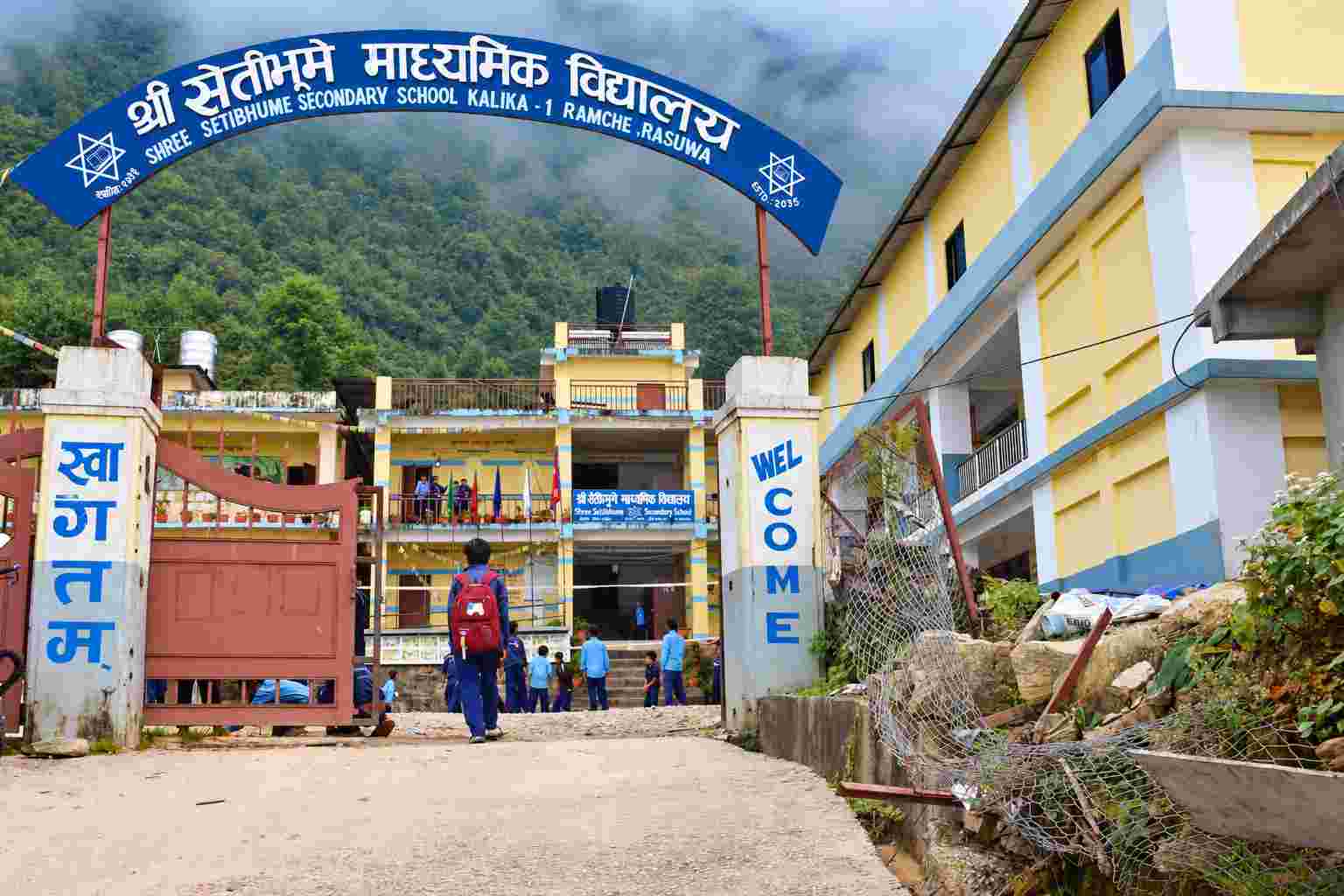
Remembering the People Affected by the Flood
The Bhotekoshi flood caused deep suffering across Rasuwa, Nuwakot and neighbouring areas. Families lost loved ones, homes, property, livelihoods and possessions built over many years. Sole Encounters Foundation extends its heartfelt sympathy to everyone affected. We especially remember those who died, those who remained missing, and the families continuing to rebuild their lives while carrying grief and uncertainty.
Why We Chose This School
After the floods, our team searched for a practical way to help affected communities with the resources available to us. We learned that students at Shree Setibhume Secondary School needed educational materials to continue their studies. Following communication with the school, we chose to respond to that identified need rather than arrive with supplies that had not been requested.
About Shree Setibhume Secondary School
Shree Setibhume Secondary School is a community school in Ramche, Kalika Rural Municipality-1, Rasuwa District. It provides education from Early Childhood Development through Grade 12. Published school information records approximately 356 enrolled students, while 354 students received materials through this Foundation project. The school therefore serves children across a wide range of ages and educational stages.
Student Enrollment by Level
| Education Level | Number of Students |
|---|---|
| Early Childhood Development | 52 |
| Grades 1 to 5 | 111 |
| Grades 6 to 8 | 115 |
| Grades 9 to 10 | 65 |
| Grades 11 to 12 | 13 |
| Total | 356 |
Journey to Rasuwa
Reaching the school demonstrated how seriously transport had been affected. Damage to the established road network forced vehicles onto difficult alternative routes through Nuwakot and Rasuwa. Our journey required approximately 13 hours to reach Kalikasthan. This was not normal travel time, but a reflection of damaged roads, rain, construction activity and the fragile transport conditions following the disaster.
Road Conditions and Recovery Work
Several sections of the road network remained damaged, muddy or difficult to pass. Alternative routes were carrying traffic that would normally use the main road. During the journey, we observed excavators and road crews clearing debris and improving temporary access. Government and local authorities were actively working in the area, but continued rainfall and unstable sections meant travel remained difficult and unpredictable.
Impact on Food and Essential Supplies
Road destruction also affected the movement of food, medicine, household goods and construction materials. Communities that relied on the damaged route faced interruptions to normal supply chains, placing additional pressure on local markets and families. The situation showed how transport infrastructure directly affects everyday life. Restoring reliable road access is therefore essential for education, healthcare, trade, agriculture and wider community recovery.
Community Hopes for Better Road Access
Local people expressed hope that the original road connection would be properly restored while the alternative route would also be strengthened. Maintaining two dependable routes could improve long-term resilience if future floods or landslides damage one connection. Better roads would support local markets, schools, health services, tourism and agriculture while reducing the risk of communities becoming isolated during another emergency.
Educational Materials Distributed
The Foundation distributed stationery, learning materials and sports supplies to 354 students. These resources were selected because the school had identified them as an immediate requirement. Although educational materials cannot repair the wider losses caused by the flood, they can reduce one financial burden for affected families and help students return to classroom routines with the basic resources required for learning.
Meeting Students, Teachers and the Community
The field visit allowed our team to speak directly with school leadership, teachers, students and community members. These discussions gave us a clearer understanding of how families were managing after the disaster. The visit also revealed needs that would not have been visible through a simple material distribution, particularly the circumstances of vulnerable children requiring continued educational and household assistance.
Nineteen Students Requiring Further Support
School leadership identified 19 students experiencing particularly serious family circumstances following the flood. These children require careful follow-up because disruption within the household may affect their ability to remain in education. Future assistance should consider school expenses, clothing, food, transportation, emotional wellbeing and other essential needs. Their individual situations should be assessed responsibly before any long-term support program is developed.
Emotional and Psychosocial Needs
Children affected by disaster may continue experiencing fear, grief, uncertainty and changes within their families long after physical damage is repaired. Returning to school can restore routine and social connection, but some students may require additional emotional support. Sole Encounters Foundation is not a specialist mental-health provider, so any future psychosocial assistance should involve appropriately qualified professionals and responsible local coordination.
Immediate Impact of the Program
The clearest result was that 354 students received essential educational materials. The project reduced some immediate costs for families and provided useful resources for classroom participation. Equally important, the visit helped Sole Encounters Foundation better understand local conditions, household vulnerability and school priorities. This information will guide future decisions and help ensure that additional assistance responds to genuine needs rather than assumptions.
What We Could Do, We Did
Sole Encounters Foundation does not have the resources to rebuild roads, replace every lost home or solve every difficulty caused by the flood. However, limited capacity should not prevent meaningful action. We identified an achievable need, travelled to the community, delivered the requested materials and listened carefully. We did what we could with the resources available, while recognising that much more remains to be done.
What This Project Could Not Solve
Educational materials are only one part of recovery. They cannot replace a lost family member, rebuild damaged property, restore livelihoods or provide long-term financial security. This project should therefore be understood as an immediate educational response rather than a complete solution. The field visit helped us identify where future assistance may be more important, particularly for vulnerable students and affected households.
Our Commitment to Future Support
Our connection with the school does not need to end with one distribution. Sole Encounters Foundation intends to remain in communication with school leadership and continue helping where our capacity allows. Priority will be given to needs that can be clearly verified and responsibly supported. We will avoid promises we cannot keep, but where practical assistance is possible, we will continue to respond.
Recommendations and Next Steps
Future work should include follow-up with the 19 vulnerable students, continued communication with school leadership, assessment of additional educational needs, and careful monitoring of household circumstances. Qualified psychosocial assistance should be considered where appropriate. Future visits should also monitor road access, local supply conditions and school recovery so that any further support is based on updated information rather than conditions observed only once.
Thank You to Shree Setibhume Secondary School
We sincerely thank the principal, vice-principal, teachers and staff for welcoming our team and helping us understand the circumstances of their students. We are especially grateful to the children and families who allowed us to share a small part of their recovery journey. Your openness gave us the opportunity to provide assistance and better understand how future support can be more meaningful.
Thank You to Our Supporters
Every person who supports Sole Encounters Foundation helps make community projects possible. Contributions may take the form of funding, materials, information, professional skills, volunteering or simply connecting us with communities facing genuine needs. We are grateful to everyone who helped make this Rasuwa project possible and gave us the ability to turn concern into practical action.
Looking Ahead
Recovery in Rasuwa will take time. Roads must become reliable, businesses and markets need stable supply routes, schools must continue operating, and vulnerable families may require support long after emergency attention fades. We hope our work at Shree Setibhume Secondary School becomes the beginning of continued engagement. Where we can responsibly help again, we will do our best to return.
With Sympathy, Respect and Hope
To everyone affected by the Bhotekoshi flood in Rasuwa, Nuwakot and surrounding areas, we offer our deepest sympathy. We remember those who lost their lives and stand with families who lost homes, property and livelihoods. To the students rebuilding their routines after the disaster, we hope education remains a source of stability, confidence and possibility for the future.
Sole Encounters Foundation
Kathmandu, Nepal
Field Visit: 1 October 2026
Ramche, Kalika Rural Municipality-1, Rasuwa District